
The Wisdom Keepers: How Menopause Made Women the Healers of Humanity
Why women live beyond fertility—unraveling the wisdom of menopause, the grandmother hypothesis, and herbal allies for longevity.

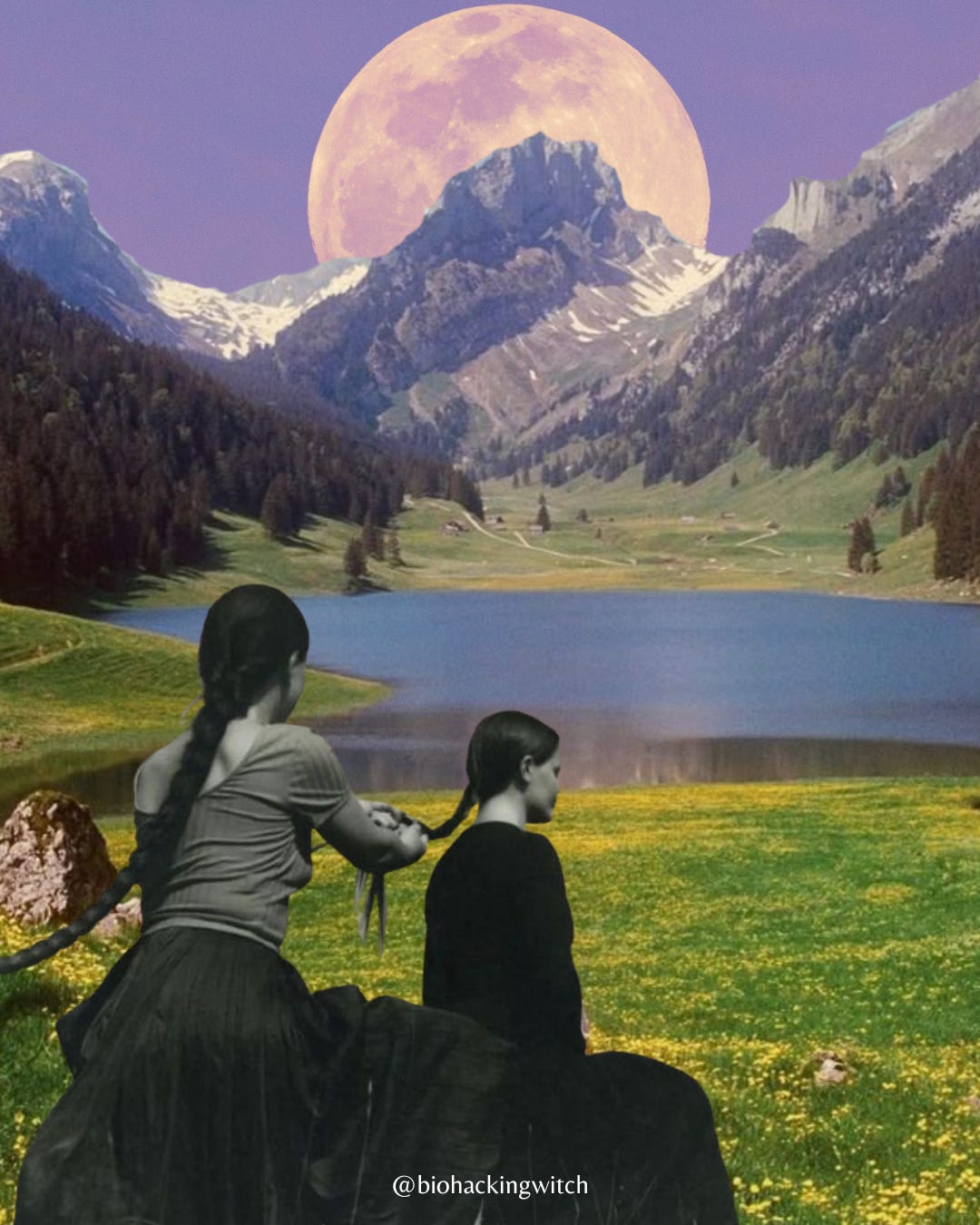
For centuries, we have been told that menopause is an ending. A slow decline. A quiet fading into the background. But nature does not create without purpose. She does not waste energy on what is no longer needed. If women were meant to cease fertility yet continue living for decades beyond it, there must be wisdom woven into this transition.
From Child-Bearers to Wisdom Bearers
In the earliest human tribes, survival depended not just on strength, but on knowledge. The men may have gone out to hunt, but it was the women who sustained the tribe, ensuring that life continued even in the harshest conditions.
As younger women carried and birthed new generations, it was the elders—those who had crossed the threshold of menopause—who became the true keepers of wisdom. Their bodies, now past the cycles of fertility, shifted their focus from creation to preservation, healing, and teaching.
These women were the first healers, midwives, and herbalists. While the men risked their lives in the wild, it was the grandmothers who held the knowledge of the land—what nourished, what healed, what could save a life.
The Grandmother Hypothesis: An Evolutionary Advantage
Modern science is now catching up to what ancient cultures always knew. The Grandmother Hypothesis suggests that menopause is not a flaw in human biology but an evolutionary strategy—one that ensured the survival of our species.
Studies show that communities with active, engaged grandmothers had higher child survival rates. These elder women played a vital role in passing down knowledge, gathering food, healing the sick, and guiding the next generation. They were not just caregivers; they were leaders, teachers, and the foundation of culture itself.
And one of their greatest gifts? Herbal wisdom.
The Herbal Knowledge of the Wisdom Keepers
My mother is deeply connected to herbal medicine. As a child, she cured me through many sick days, her remedies woven into warm teas and soothing hands. Even as an adult, I find myself calling her, seeking the knowledge she carries. It is through her that I remember: nature has always been our most loyal healer.
Here are my favorite herbs for hormonal balance, nervous system support, and longevity—remedies that have nourished our ancestors for centuries and most likely sit in your pantry today.
🌿 Rosemary – Enhances memory, concentration, and focus. Its scent alone is enough to sharpen the mind, while its leaves provide iron, vitamin B6, and immune-boosting properties. I keep a sprig at my desk, inhaling its earthy aroma when my thoughts begin to wander.
🍃Sage – Called the "guardian of herbs," sage has long been revered for its hormone-balancing and longevity-enhancing properties. It is known to ease hot flashes and night sweats in menopausal women, while also carrying antimicrobial and calming effects. A simple sage tea, made with fresh or dried leaves, can be a daily ritual of deep nourishment.
🩸 Yarrow – A master of the blood mysteries, yarrow has been used for millennia to regulate cycles, ease menstrual cramps, and heal postpartum hemorrhage. It is both a wound-healer and a cycle-restorer—an ally for women at every stage of life.
🌙 Lemon Balm – A plant of the moon and the heart, lemon balm is a powerful nervine, easing anxiety, panic, tension headaches, and restless sleep. It is especially beneficial for anyone navigating emotional transitions, offering comfort and grounding when the nervous system feels overstimulated.
🌾 Nettle – Rich in iron, minerals, and chlorophyll, nettle is one of the most nourishing plants for women. It supports blood health, energy levels, and skin clarity, making it an essential ally during times of depletion—whether after childbirth, heavy menstruation, or simply when the body feels worn thin.
🫚 Ashwagandha – An adaptogenic powerhouse, ashwagandha is beeing used to reduce cortisol, lower stress, and ease perimenopausal symptoms. It is a herb that strengthens resilience and supporting us in moving through life’s transitions with power and ease.
🌼 Chamomile – More than just a bedtime tea, chamomile is a potent hormonal ally. It helps to lower testosterone in women with PCOS, reduce menstrual cramps, and regulate bleeding. I often add chamomile to my bath—sinking into its floral presence, feeling deeply held by its gentle, but powerful, medicine.
(As always, consult your doctor or herbalist before using new herbs, especially if you are pregnant or on medication.)
A Reclamation of Power
Menopause was never meant to be a loss of power—it was meant to be a passing of the torch. A transition from mother to crone, from vessel of creation to guardian of wisdom.
To honor this phase is to remember its original purpose—not as an ending, but as an initiation. A woman stepping into her wisest, most powerful self.
This is the truth of menopause. Not a fading, but a rising.
With love and herbal wisdom,
Pia
This is just the beginning. 🌙 Subscribe for free to receive new posts on weaving ancient wisdom into modern life.